- Glinka-Painting
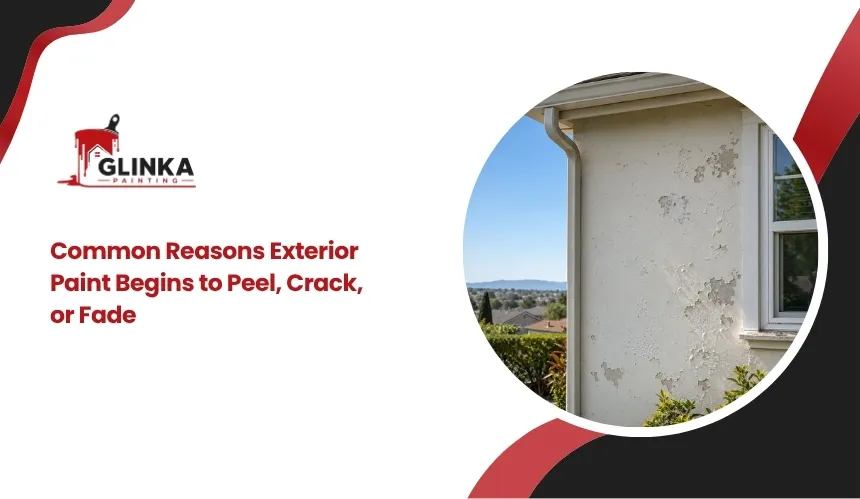
Common Reasons Exterior Paint Begins to Peel, Crack, or Fade
Exterior paint is designed to protect a home from sunlight, moisture, and changing weather, but it does not last forever. Over time, homeowners may notice peeling, cracking, fading, or uneven color changes that make the exterior look older and less maintained.
These problems usually happen for specific reasons. Poor preparation, moisture, weather exposure, incorrect paint selection, and normal aging can all affect how well exterior paint performs after it is applied.
This blog explains what causes exterior paint to peel, crack, or fade, and why understanding the source of the problem matters before repainting the surface.
1. Poor Surface Preparation Before Painting
A successful exterior paint job begins with proper surface preparation. If dirt, mildew, chalky residue, loose paint, or other contaminants remain on the surface, the new paint may not bond as intended. Even high-quality paint can struggle to perform well when it is applied over an unstable or poorly prepared surface.
Why contaminants weaken paint adhesion
Exterior surfaces naturally collect dust, pollen, mildew, algae, and environmental pollutants throughout the year. If these contaminants are not removed before painting, they create a barrier between the paint and the surface underneath, reducing the strength of the bond.
As the buildup loosens or deteriorates over time, the paint attached to it may begin to peel or flake away as well. Thorough cleaning before painting helps create a solid foundation for better adhesion.
How inadequate preparation affects paint performance
Surface preparation often includes cleaning, scraping loose paint, sanding rough areas, repairing damaged sections, and applying primer where needed. Skipping these steps can leave weak spots that affect both the appearance and durability of the finished paint job.
When the surface has not been prepared properly, the paint may begin showing signs of failure much sooner than expected. Taking the time to prepare the exterior correctly helps improve the overall performance of the new coating.
2. Moisture Can Break Down the Paint Layer
Moisture is one of the most common causes of exterior paint failure. Water can reach painted surfaces in many ways, including rain, humidity, roof leaks, damaged caulking, or poor drainage around the home. When moisture repeatedly reaches the surface or becomes trapped behind the paint, it can gradually weaken the bond between the coating and the material underneath.
How water enters behind exterior paint
Water can enter through small cracks, unsealed joints, damaged trim, or gaps around windows and doors. Even minor openings may allow moisture to penetrate behind the paint, especially during heavy rain or prolonged periods of damp weather.
If these entry points are not addressed, moisture can continue affecting the surface beneath the paint. Over time, this hidden exposure may lead to visible signs of paint deterioration.
Why trapped moisture leads to peeling and blistering
When moisture becomes trapped beneath the paint layer, it creates pressure that can force the coating away from the surface. This often appears as bubbling, blistering, or peeling as the paint gradually loses its ability to remain attached.
The problem may continue even after repainting if the source of the moisture is not corrected first. Identifying and resolving moisture issues before applying new paint helps create a more durable and longer-lasting finish.
3. Constant Sunlight and Weather Exposure
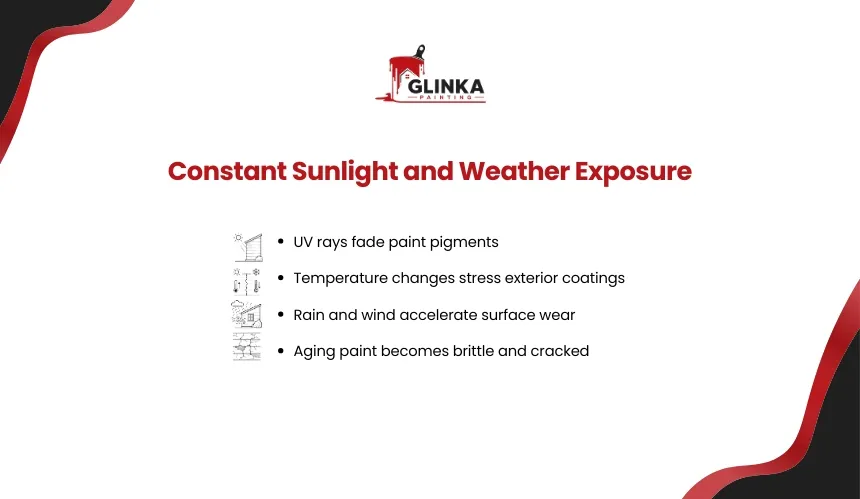
Exterior paint is exposed to the elements every day, making weather one of the biggest factors affecting its lifespan. Sunlight, rain, wind, temperature fluctuations, and seasonal changes gradually wear down the protective coating. Even a properly applied paint system will naturally show signs of aging after years of continuous outdoor exposure.
How ultraviolet rays affect exterior paint
Ultraviolet (UV) rays from the sun slowly break down the binders and pigments that give paint its color and durability. As this process continues, the paint may begin to lose its original richness, causing the surface to appear dull, faded, or uneven.
South- and west-facing walls often receive the most direct sunlight, which can make fading more noticeable in those areas. Darker paint colors may also show the effects of prolonged sun exposure sooner than lighter shades.
Why changing weather accelerates paint wear
Exterior surfaces constantly expand and contract as temperatures rise and fall throughout the year. Combined with rain, humidity, and wind, this repeated movement places stress on the paint layer and gradually reduces its flexibility.
As the coating ages, it may become more brittle and less able to move with the surface beneath it. This natural wear can eventually contribute to cracking, peeling, and other signs of paint failure, particularly in regions with frequent weather changes.
4. Using the Wrong Paint or Application Method
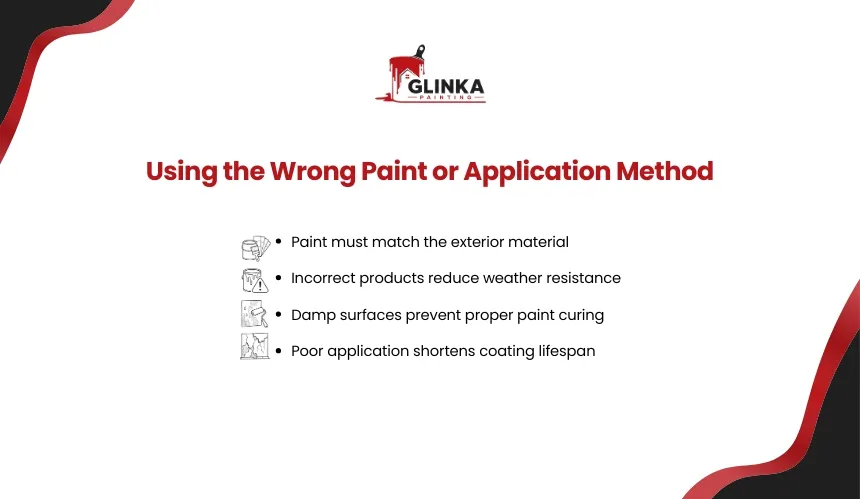
Even with good surface preparation, exterior paint may not perform as expected if the wrong product is used or if it is applied incorrectly. Different exterior materials require specific types of paint, primers, and application techniques. Selecting products that are not suited to the surface can reduce the durability of the finished coating.
Why product selection matters
Exterior paints are formulated to perform under different environmental conditions and on different building materials. Choosing a product that is compatible with the surface helps improve adhesion, weather resistance, and overall performance after the paint has cured.
Using the wrong type of paint may reduce its ability to withstand sunlight, moisture, and temperature changes. Over time, this can increase the likelihood of peeling, cracking, or premature fading.
How improper application affects durability
Applying paint under unsuitable weather conditions or failing to follow the recommended application process can also affect the quality of the finish. Paint that is applied to damp surfaces, during extreme temperatures, or without adequate drying time between coats may not cure as intended.
These application issues can weaken the paint film and reduce its ability to protect the exterior over the long term. Following proper application practices helps create a stronger, more durable finish that performs better in outdoor conditions.
5. Normal Aging and Lack of Maintenance
Even a well-applied exterior paint job will gradually wear over time. Years of exposure to sunlight, rain, wind, and changing temperatures slowly reduce the paint’s protective qualities. As the coating ages, it naturally becomes more susceptible to fading, cracking, and peeling, even when no major problems are present.
Why exterior paint naturally deteriorates over time
Exterior paint is constantly exposed to conditions that slowly break down its protective properties. Over the years, the paint may lose flexibility, become more brittle, and show signs of weathering as it continues to protect the surface beneath it.
The rate of deterioration varies depending on the climate, the quality of the previous paint job, and the amount of exposure the home receives. While this aging process is unavoidable, it is a normal part of the life cycle of exterior paint.
How regular inspections help identify early problems
Inspecting the home’s exterior on a regular basis makes it easier to spot small issues before they become larger ones. Early signs such as minor peeling, small cracks, faded areas, or damaged caulking can often be addressed before they affect larger sections of the paint.
Routine maintenance also provides an opportunity to clean exterior surfaces and correct moisture or repair issues that could shorten the life of the paint. Addressing these concerns promptly helps preserve both the appearance and performance of the home’s exterior.
Frequently Asked Questions
Does peeling paint always mean the entire house needs repainting?
Not always. If the damage is limited to a small area and the underlying cause is corrected, localized repairs may be sufficient. Widespread paint failure, however, may require a more extensive repainting project.
Can moisture damage paint even if there are no visible leaks?
Yes. High humidity, condensation, poor drainage, or small gaps around exterior components can allow moisture to affect painted surfaces without creating obvious water leaks.
Why do some sides of a house fade faster than others?
Different sides of a home receive varying amounts of sunlight and weather exposure. Walls that face prolonged direct sunlight often experience faster fading than those that remain shaded.
Is pressure washing enough to prepare a surface for repainting?
Pressure washing removes dirt and contaminants, but additional preparation, such as scraping, sanding, repairing damaged areas, and priming, may still be necessary depending on the condition of the surface.
Can exterior paint fail even when high-quality products are used?
Yes. Even premium paint can fail prematurely if the surface is not prepared correctly, moisture problems are present, or the paint is applied under unsuitable conditions.