- Glinka-Painting
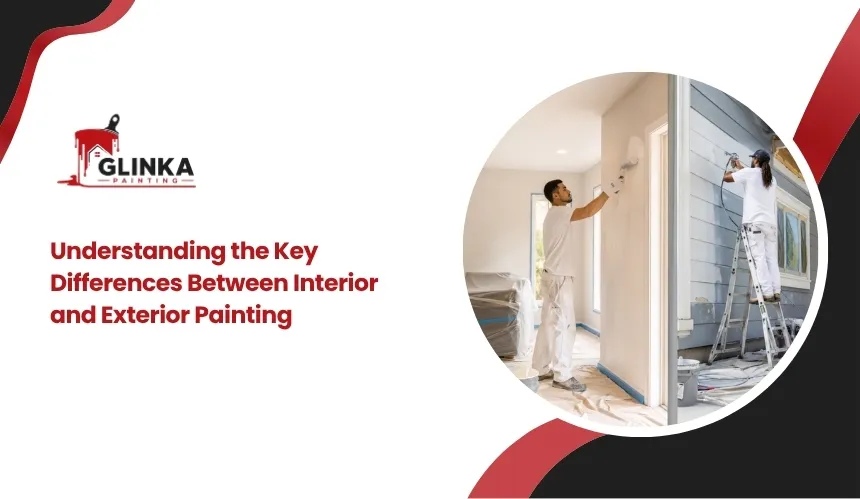
Understanding the Key Differences Between Interior and Exterior Painting
Interior and exterior painting may seem similar because both involve applying paint to a surface, but the requirements are very different. Each project uses different materials, preparation steps, and application methods because indoor and outdoor surfaces face different conditions.
Interior painting focuses on appearance, clean lines, durability against daily use, and a smooth finish inside the home. Exterior painting must handle sunlight, rain, temperature changes, moisture, and outdoor exposure while protecting the surface underneath.
This blog explains the key differences between interior and exterior painting so homeowners can better understand why choosing the right paint, process, and preparation method matters for each type of project.
1. Paint Formulation and Performance
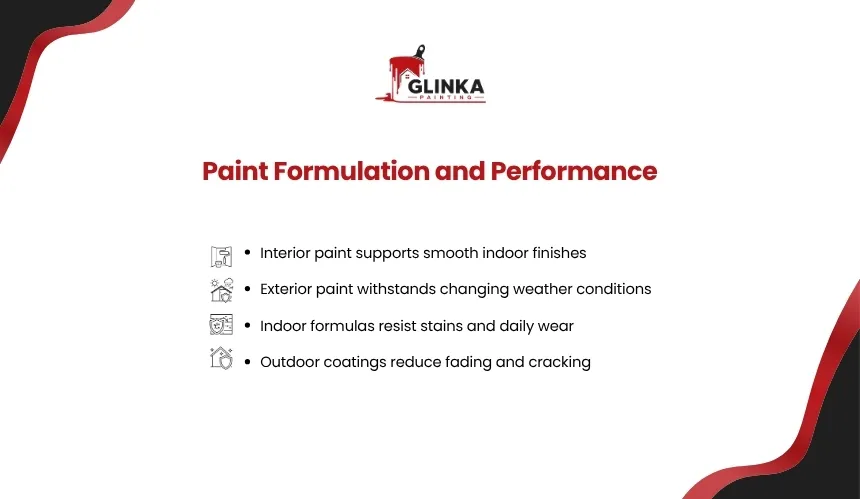
Although interior and exterior paints may look similar once applied, they are manufactured for very different environments. Each type is formulated to perform under specific conditions, which is why choosing the correct product is essential for achieving a durable and attractive finish.
How interior paint is designed for indoor conditions
Interior paint is formulated for spaces that are protected from direct sunlight, rain, and extreme temperature changes. It is designed to provide a smooth finish, resist everyday wear, and allow for easy cleaning in areas such as living rooms, kitchens, bedrooms, and hallways.
Many interior paints also focus on appearance and stain resistance because indoor surfaces experience regular contact from people, furniture, and routine household activities. These characteristics help the paint maintain its finish while supporting the overall look of the home.
How exterior paint withstands outdoor exposure
Exterior paint is manufactured to withstand harsh environmental conditions that interior paint is never intended to face. Constant exposure to sunlight, moisture, wind, and changing temperatures requires a coating that can expand and contract without failing as the surface beneath it naturally moves.
In addition to providing color, exterior paint serves as a protective barrier against weather-related damage. Its formulation is designed to help resist fading, peeling, cracking, and moisture penetration, allowing the painted surface to perform reliably throughout changing outdoor conditions.
2. Surface Preparation Requirements
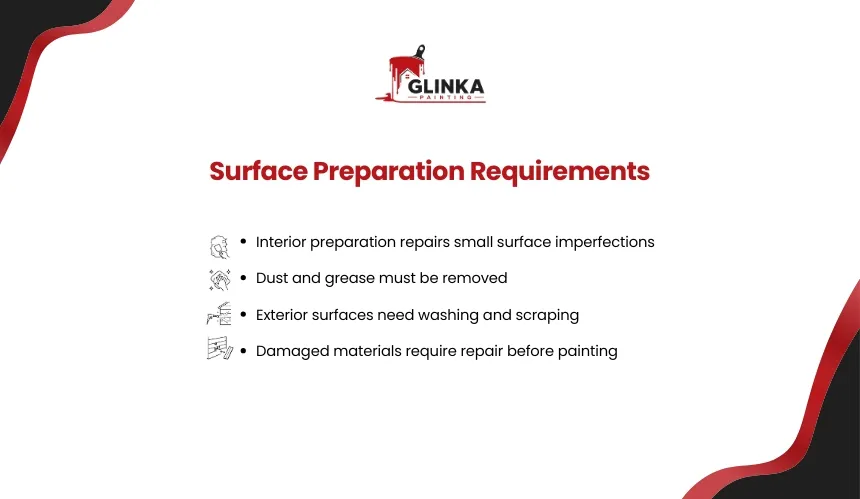
Proper surface preparation is essential for both interior and exterior painting, but the work involved is often quite different. The condition of the surface and the environment it has been exposed to determines the type of preparation needed before paint can be applied successfully.
How preparation differs for interior surfaces
Interior preparation typically focuses on creating a smooth and clean surface. This may include filling nail holes, repairing small dents or cracks, sanding rough areas, removing dust, and cleaning away grease or stains that could interfere with paint adhesion.
Because indoor surfaces are generally protected from weather, the preparation process is often more focused on achieving a uniform finish. Taking time to correct minor imperfections helps create cleaner paint lines and a more polished final appearance.
How exterior surfaces require additional preparation
Exterior surfaces are exposed to dirt, moisture, sunlight, mildew, peeling paint, and other environmental conditions that can affect the performance of a new paint coating. Preparation often involves power washing, scraping loose paint, sanding weathered areas, replacing damaged materials, and sealing gaps before painting begins.
Since exterior paint also serves as a protective barrier, preparing the surface thoroughly is especially important. Addressing existing issues before painting helps improve paint adhesion and supports a longer-lasting finish.
3. Application Challenges
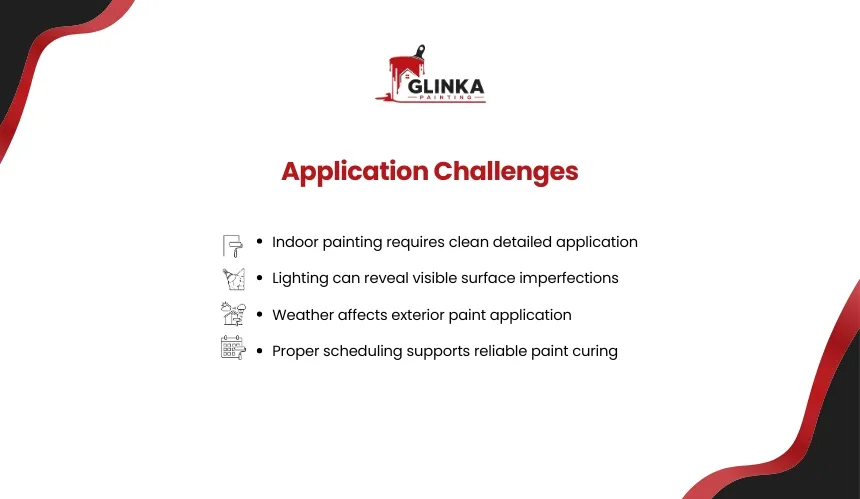
Applying paint successfully depends on more than choosing the right color. Interior and exterior painting each present different challenges that can affect the quality of the finished project. Understanding these differences helps explain why the application process is not the same for every painting job.
How interior painting is affected by indoor conditions
Interior painting is typically completed in a more controlled environment where the weather is not a concern. Even so, factors such as room temperature, ventilation, humidity, lighting, and furniture placement can influence how smoothly the project progresses and how the paint dries.
Attention to detail is especially important indoors because imperfections are often more noticeable under artificial and natural lighting. Achieving clean edges, consistent coverage, and an even finish requires careful preparation and application.
How outdoor conditions affect exterior painting
Exterior painting is heavily influenced by weather conditions throughout the project. Temperature, humidity, wind, direct sunlight, and the possibility of rain can all affect how the paint is applied and how well it cures after application.
Because these conditions can change throughout the day, exterior painting often requires careful scheduling. Choosing suitable weather conditions helps support proper adhesion and contributes to a more durable, long-lasting finish.
4. Maintenance and Long-Term Care
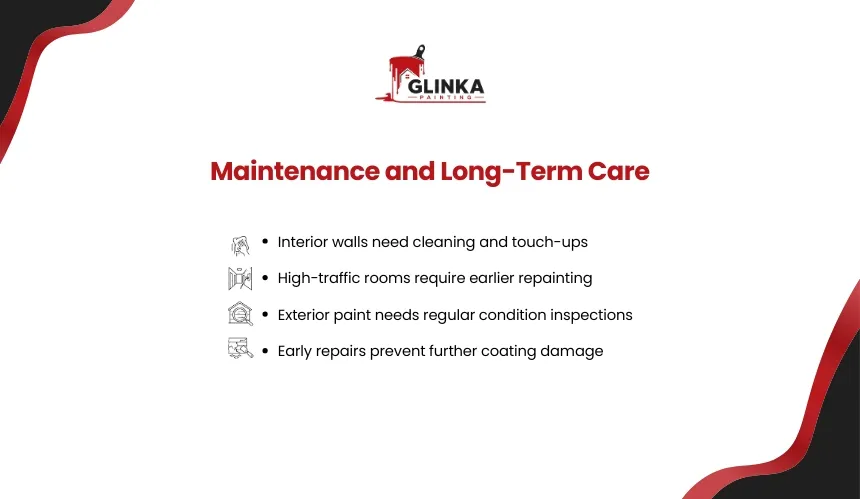
Interior and exterior painted surfaces both benefit from regular maintenance, but the type of care they require is quite different. Because indoor and outdoor environments expose paint to different conditions, homeowners should expect different maintenance needs over the life of the paint.
How interior painted surfaces are maintained
Interior walls and ceilings are primarily exposed to everyday household activity rather than harsh weather. Routine maintenance usually involves cleaning scuff marks, removing stains, and touching up small areas that become damaged through normal use. With proper care, interior paint can continue looking fresh for many years.
The frequency of repainting often depends on how each room is used. High-traffic areas such as hallways, kitchens, and children’s rooms may require touch-ups or repainting sooner than spaces that experience less daily activity.
How exterior paint requires different upkeep
Exterior paint is constantly exposed to sunlight, moisture, temperature changes, and airborne contaminants. Over time, these conditions can gradually affect the appearance and protective performance of the paint, making periodic inspections and maintenance an important part of caring for the home’s exterior.
Homeowners should also watch for signs such as fading, peeling, cracking, or mildew growth, as these may indicate that maintenance or repainting is needed. Addressing small issues early can help preserve both the appearance of the home and the condition of the exterior surfaces.
5. How to Choose the Right Paint for the Right Project
Selecting the correct paint is just as important as choosing the right color. Interior and exterior paints are developed for different environments, so using the appropriate product helps ensure better performance, durability, and appearance. Matching the paint to the project allows homeowners to get the best results from their investment.
Why interior and exterior paints should not be interchanged
Interior paint is designed for controlled indoor environments, while exterior paint is formulated to withstand changing weather conditions. Using interior paint outdoors can lead to premature fading, peeling, or moisture-related problems because it is not made to handle environmental exposure.
Likewise, exterior paint is not intended for interior living spaces. Its formulation is designed for outdoor performance rather than the conditions found inside a home, making it unsuitable for most indoor painting projects.
When to consult a professional painter
While smaller painting projects may be manageable for some homeowners, larger or more complex jobs often benefit from professional guidance. Experienced painters can recommend the appropriate products, identify surface preparation needs, and ensure the paint is applied according to the manufacturer’s recommendations.
Professional advice is also valuable when surfaces have existing damage or require specialized preparation before painting. Choosing the right paint and following the correct process helps achieve a finish that looks better and performs as intended.
Frequently Asked Questions
Can interior paint be used on exterior walls?
No. Interior paint is not designed to withstand sunlight, rain, moisture, or changing temperatures and may fail prematurely when used outdoors.
Why is exterior paint more weather-resistant?
Exterior paint is formulated to resist moisture, ultraviolet exposure, temperature fluctuations, and other environmental conditions that interior paint is not intended to handle.
Does every painting project require surface preparation?
Yes. Cleaning, repairing, and preparing the surface helps improve paint adhesion and contributes to a smoother, longer-lasting finish.
Are the application methods the same for interior and exterior painting?
The basic painting techniques are similar, but exterior projects often require additional preparation and must account for weather conditions that do not affect interior painting.
How often should interior and exterior paint be inspected?
Interior walls can be inspected during routine home maintenance, while exterior painted surfaces should be checked periodically for signs of fading, peeling, cracking, or other weather-related wear.