- Glinka-Painting
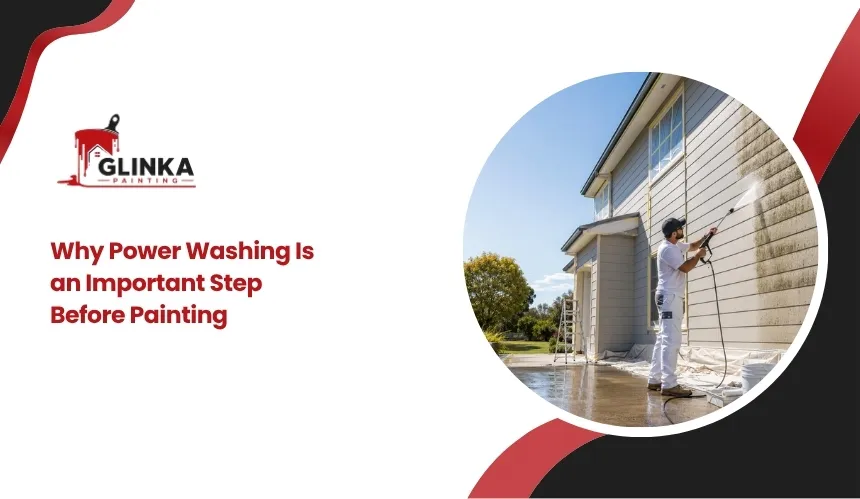
Why Power Washing Is an Important Step Before Painting
Power washing is an important preparation step before exterior painting because paint performs best on a clean, stable surface. Even high-quality paint may not bond properly if dirt, mildew, chalky residue, or old surface buildup is left behind before the first coat is applied.
A clean surface allows painters to see the true condition of the material and prepare it properly before painting begins. This helps improve adhesion, creates a smoother-looking finish, and reduces the risk of early peeling or uneven coverage after the project is complete.
This blog explains how power washing prepares surfaces for a better paint finish and why proper cleaning should happen before exterior paint is applied.
1. Power Washing Removes Dirt and Surface Contaminants
Exterior surfaces are exposed to dust, pollen, mildew, algae, bird droppings, and other contaminants throughout the year. Even when a wall appears relatively clean, a layer of buildup may still be present on the surface. Power washing removes these contaminants before painting begins, creating a cleaner foundation for the next stage of the project.
Why a clean surface helps paint perform better
Paint bonds more effectively when it is applied to a clean and properly prepared surface. Dirt and loose residue can act as a barrier between the paint and the material underneath, making it more difficult for the coating to adhere evenly. Removing these contaminants helps create better contact between the paint and the surface.
A cleaner surface also allows painters to work more consistently across the entire exterior. Without patches of dirt or residue interfering with the application, the paint is more likely to produce a uniform and professional-looking finish.
What types of buildup are commonly removed
Power washing helps remove many forms of surface contamination that naturally accumulate outdoors. Common examples include dust, mud, pollen, cobwebs, mildew, algae, chalky paint residue, and environmental pollutants that settle on siding, stucco, brick, or other exterior materials.
Removing this buildup before painting helps ensure that the new coating is applied directly to the surface rather than over contaminants. This simple preparation step contributes to a cleaner application and a better overall painting result.
2. Power Washing Helps Paint Adhere More Effectively
Good paint adhesion begins long before the first coat is applied. Even the highest-quality paint may struggle to bond properly if the surface still contains residue, loose particles, or contaminants. Power washing helps create a stable foundation so the paint can attach more evenly to the exterior material.
How surface preparation improves adhesion
Power washing removes loose debris and prepares the surface for additional steps such as scraping, sanding, or priming where needed. With fewer contaminants remaining, the paint can make direct contact with the surface instead of bonding to dirt or deteriorated material.
This stronger connection helps the paint spread more evenly and reduces the chance of weak spots across the finished surface. Proper preparation is one of the most important factors in achieving a consistent paint application.
Why paint applied to dirty surfaces may fail sooner
When paint is applied over dirt, mildew, chalky residue, or loose paint, it adheres to those contaminants rather than to the surface itself. As the buildup loosens or breaks away over time, the paint layer may begin peeling, blistering, or flaking much earlier than expected.
Cleaning the surface before painting reduces this risk and gives the new coating a much better foundation. This helps create a finish that not only looks better when completed but also performs more reliably over time.
3. Power Washing Helps Reveal Hidden Surface Damage
Exterior surfaces can hide damage beneath layers of dirt, mildew, or weather-related buildup. Until those contaminants are removed, it can be difficult to identify areas that need attention before painting. Power washing exposes the true condition of the surface, allowing problems to be addressed before the new paint is applied.
What problems become easier to identify
Once the surface has been cleaned, issues such as peeling paint, hairline cracks, rotting wood, damaged caulking, loose siding, or deteriorated trim become much easier to see. These problems may have been partially hidden by dirt or discoloration, making them difficult to detect during a visual inspection.
Identifying these conditions early allows painters to prepare the surface more thoroughly. Addressing repairs before painting helps create a smoother and more durable finished result.
Why repairs should be completed before painting
Painting over damaged surfaces may temporarily improve their appearance, but it does not correct the underlying problem. If cracks, loose materials, or deteriorated sections remain untreated, they can eventually affect the new paint and lead to premature peeling or other visible defects.
Completing repairs before painting provides a stable surface for the new coating. This preparation helps improve the quality of the finished project and reduces the likelihood of problems developing soon after the work is completed.
4. Power Washing Creates a More Even and Professional Finish
A quality paint job depends not only on the paint itself but also on the condition of the surface underneath. When the exterior has been cleaned thoroughly, painters can apply the coating more evenly without dirt, stains, or residue affecting the final appearance. This helps create a finish that looks smoother and more consistent across the entire surface.
How surface consistency affects the final appearance
A clean and properly prepared surface allows the paint to spread evenly and maintain a consistent color throughout the project. Without patches of dirt or loose material interfering with the application, the finished coat is less likely to show uneven texture or noticeable imperfections.
This is especially important on large exterior walls where variations in the surface can become more visible. Proper preparation helps create a uniform appearance that enhances the overall look of the property.
Why proper preparation supports better results
Painting is the final step in the process, but the quality of the result depends heavily on the preparation completed beforehand. Cleaning the surface thoroughly allows painters to focus on achieving an even application instead of working around contaminants or hidden surface issues.
By preparing the exterior properly before painting, homeowners are more likely to achieve a professional-looking finish with improved consistency. A well-prepared surface allows the completed paint job to reflect the time and effort invested in the project.
5. Power Washing Helps Reduce Paint Peeling and Early Failure
Paint is designed to protect and improve the appearance of exterior surfaces, but its performance depends on the condition of the surface beneath it. If contaminants or loose materials remain after preparation, they can interfere with the bond between the paint and the exterior. Power washing helps reduce this risk by creating a cleaner, more stable surface before painting begins.
Why leftover buildup can weaken the paint layer
Dirt, mildew, chalky residue, and loose paint create weak points beneath a fresh coat of paint. Instead of bonding directly to the siding or trim, the paint adheres to these unstable materials, which can gradually separate from the surface over time.
As those contaminants break down or detach, the paint may begin to peel, blister, or flake earlier than expected. Removing surface buildup before painting helps eliminate many of these potential problem areas.
How better preparation supports a longer-lasting finish
A properly cleaned surface provides a stronger foundation for the entire painting process. Once contaminants have been removed and any necessary repairs have been completed, the paint can bond more consistently across the exterior.
Although many factors influence the lifespan of a paint job, thorough surface preparation plays an important role in its overall performance. Taking the time to power wash before painting helps create a finish that is more durable, more uniform, and better prepared to withstand everyday outdoor exposure.
Frequently Asked Questions
Is power washing necessary before every exterior painting project?
Not every project requires power washing, but it is commonly recommended when exterior surfaces have accumulated dirt, mildew, algae, chalky residue, or other contaminants that could affect paint adhesion.
How long should a surface dry after power washing?
Drying time depends on the material, weather conditions, and humidity. Exterior surfaces should be completely dry before primer or paint is applied to help achieve proper adhesion.
Can power washing remove loose paint?
Yes. Power washing can remove loose or peeling paint that has already lost its bond with the surface. This helps identify areas that need additional preparation before painting begins.
Does power washing replace sanding or scraping?
No. Power washing is one part of surface preparation. Depending on the condition of the exterior, scraping, sanding, caulking, or priming may still be needed before painting.
Can all exterior surfaces be power-washed?
Not always. Different materials require different cleaning methods and pressure levels. Delicate surfaces may require soft washing or lower-pressure cleaning to avoid damage.